
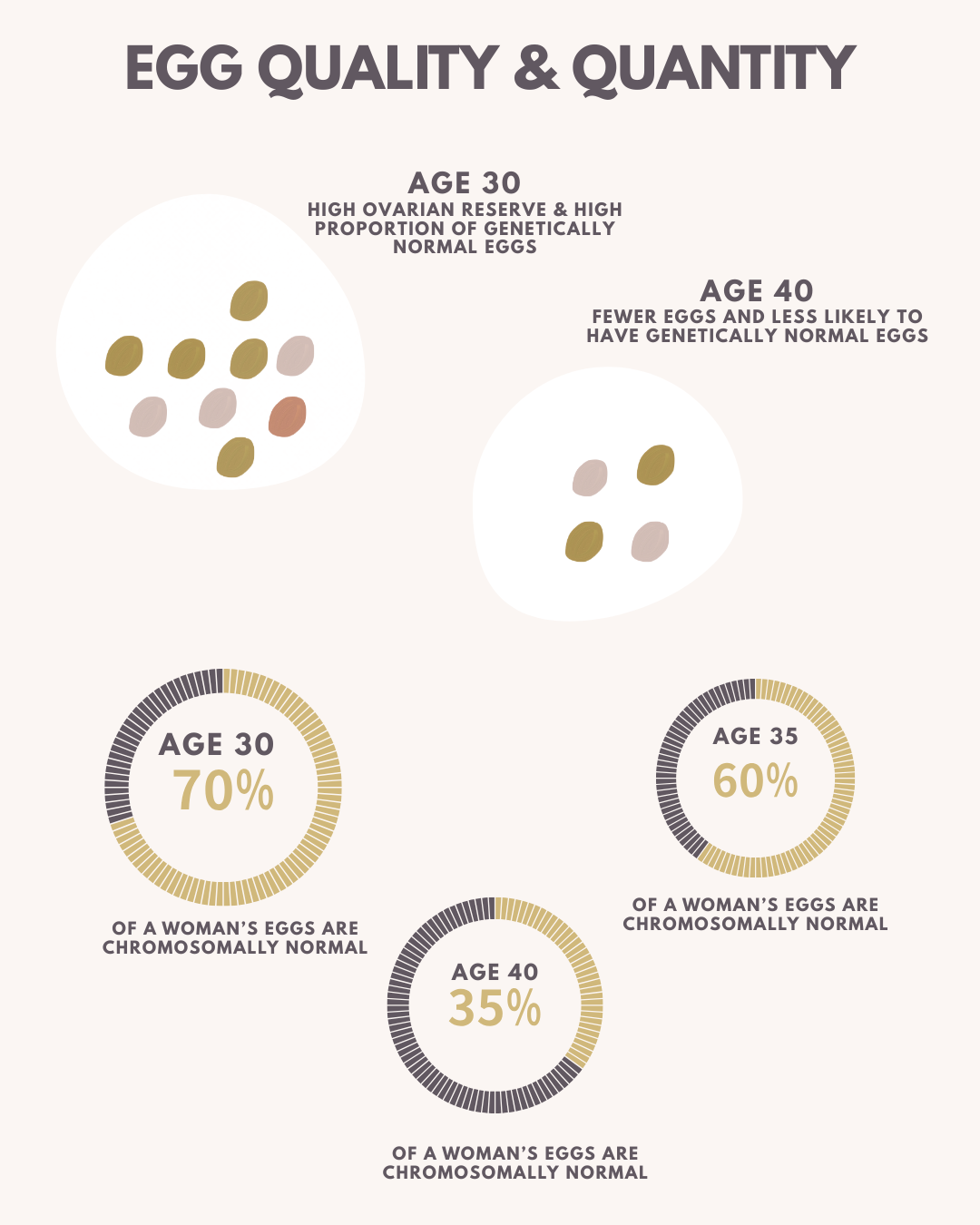
When should I freeze my eggs?
Fertility naturally declines with age, with a more noticeable drop from the mid‑30s. While egg freezing remains possible in later reproductive years, success rates are closely linked to the age at which eggs are frozen.
Genetic and lifestyle factors, such as weight, exercise, stress, and environment, also play a role in fertility decline, but age has the greatest impact on ovarian reserve and egg quality.
A fertility assessment will give you a clear understanding of your current ovarian reserve, helping you make an informed decision.
Once frozen, your eggs remain the same biological age, preserving their quality for future treatment.
How many eggs should I freeze?
More women than ever are choosing to have elective egg freezing as a way of securing their reproductive options for the future. It is always difficult to determine how many eggs to store for each patient.
Your consultant will advise whether a single cycle is likely to be sufficient or whether multiple cycles might offer a better chance of achieving the number of eggs recommended for your age group.
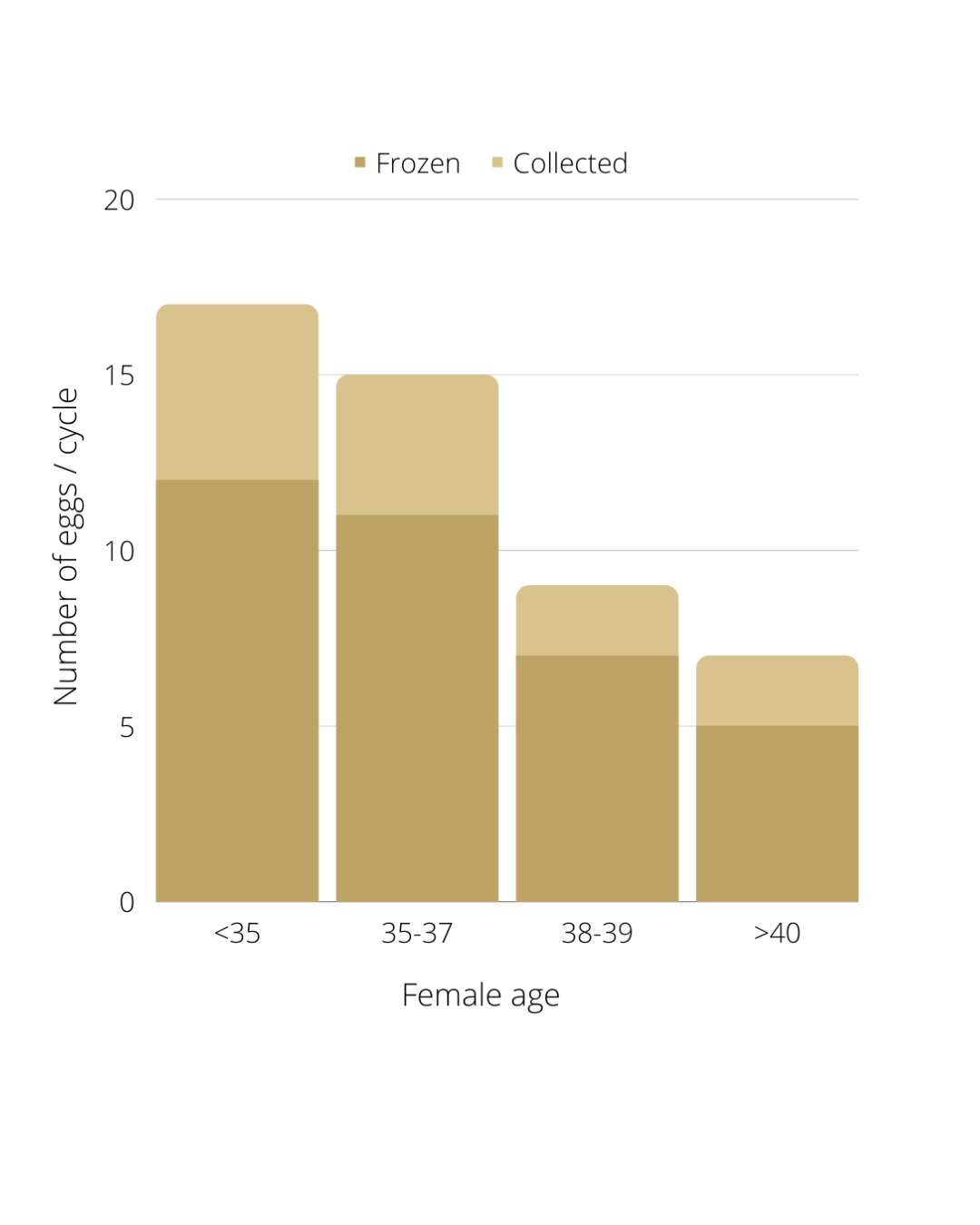
The graph shows the average number of eggs collected and then frozen from women of different age groups at Aria. Unfortunately, not every egg collected is at the correct stage of development (a mature egg) and is suitable for freezing.
For this reason, the number of eggs collected and those that can be frozen are usually different.
What happens when I’m ready to use my eggs?
When you are ready to use your frozen eggs, you can use your partner’s sperm or will need to find a sperm donor to fertilise them. There are many options for finding a sperm donor, and we can support you through the process.
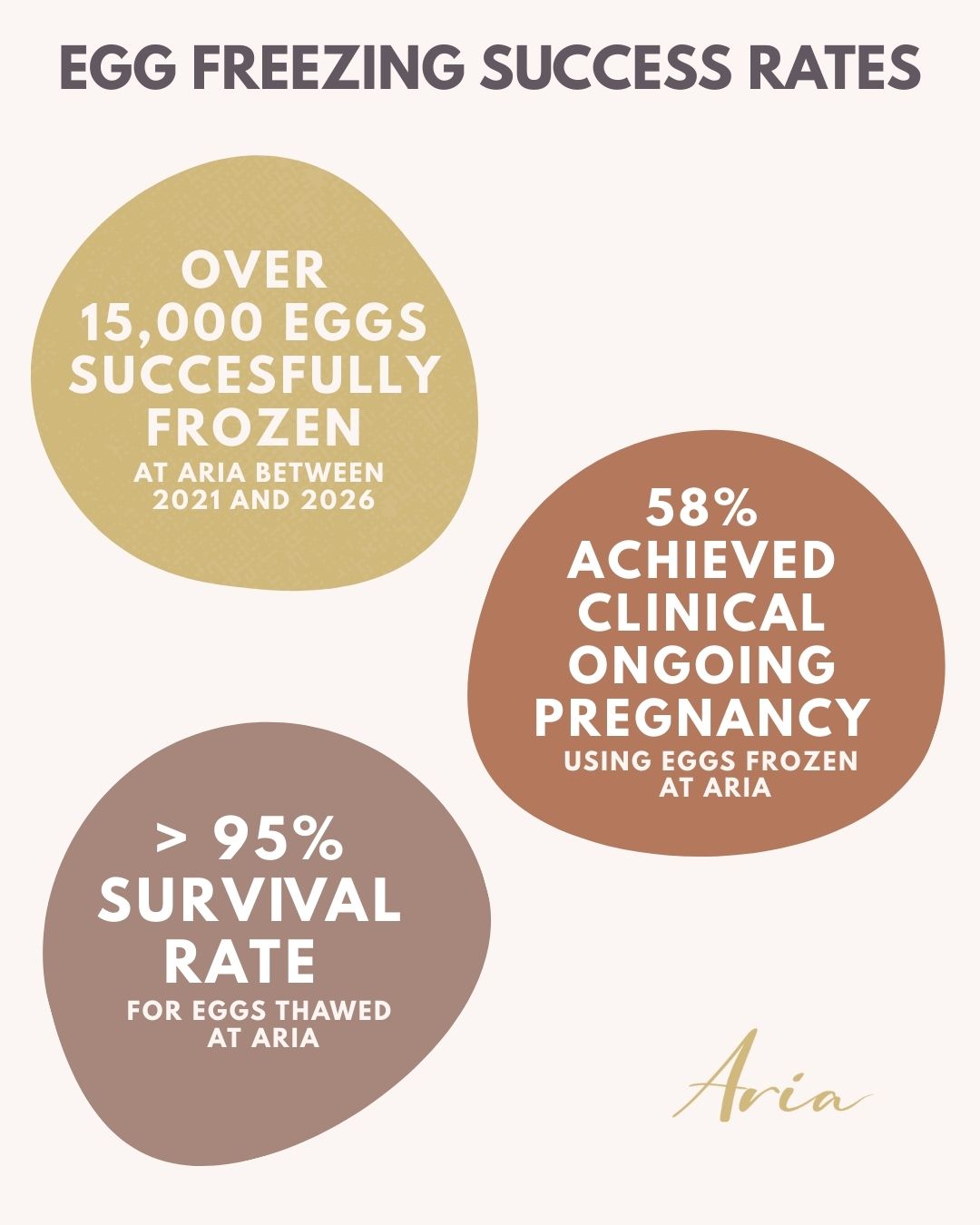
Our embryologists will carefully thaw your eggs using a warming protocol that protects them from damage. Thanks to the initial vitrification process, thaw rates are high, and most eggs do survive.
The thawed eggs will then be fertilised using a fertility treatment called ICSI (intracytoplasmic sperm injection), where one sperm is injected into each egg. The freezing process makes the outer coating around the eggs tougher, and sperm may be unable to penetrate it naturally under standard IVF.
Embryos are monitored for development over a few days, before the most viable one is selected and transferred into your uterus. While there are no guarantees, freezing your eggs at a younger age is associated with a higher chance of conception when you’re ready to use them.
Want to know more about
egg freezing?
Please email us at ADMIN@ARIAFERTILITY.CO.UK or fill in the contact form below, and one of our Patient Services Team will be in touch. We can answer your questions, walk you through the process, or arrange a consultation with one of our experts.